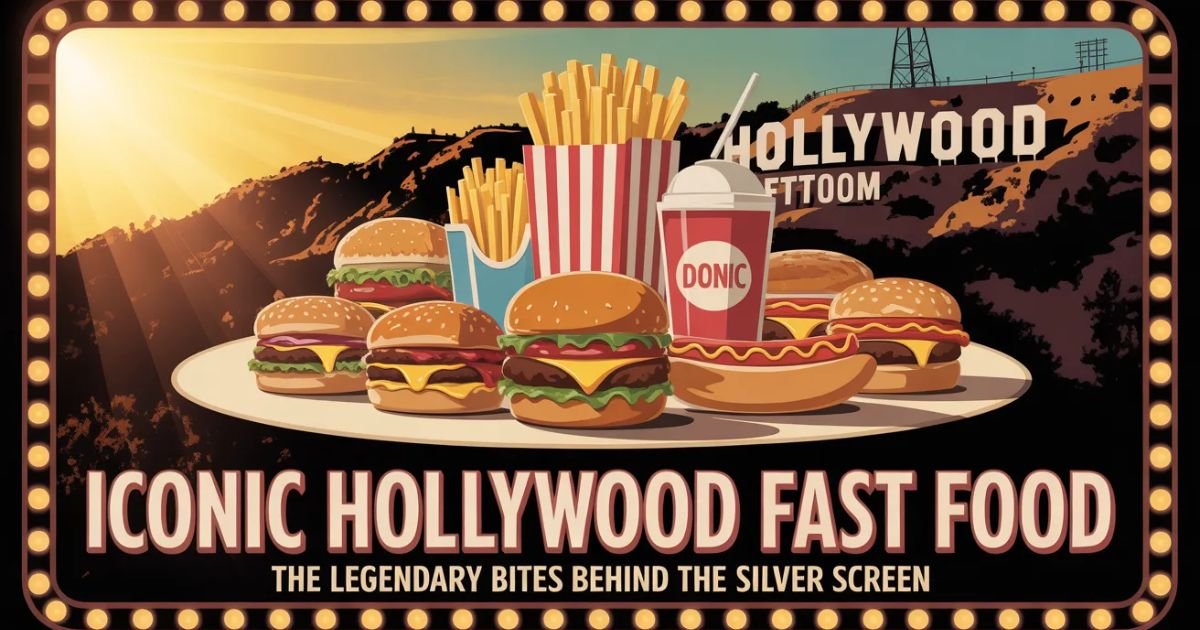

There’s something almost mythological about eating a burger under the glow of a neon sign in Los Angeles. It’s not just food. It’s culture, nostalgia, and a little bit of movie magic all wrapped in wax paper.
Hollywood has given the world blockbusters, superstars, and red carpets. But tucked between the studios and the star-studded boulevards? Some of the most iconic fast food spots in American history. These aren’t just places to grab a quick meal. They’re landmarks. Living, breathing pieces of the Los Angeles fast food scene that refuse to fade.
The Cultural Power of Fast Food in Hollywood
Fast food and Hollywood grew up together. Both exploded in the post-WWII boom, both became symbols of American optimism, and both thrived on the idea that something extraordinary could be quick, affordable, and deeply satisfying.
Hollywood food culture didn’t build itself around white-tablecloth restaurants. It was built on chili burgers at midnight, hot dogs eaten standing up, and double-doubles ordered through a speaker. That rawness is the point. Even today, the entertainment industry dining scene circles back to these humble spots with a kind of reverence you just can’t manufacture.
The Historic Origins of Hollywood Fast Food
The Los Angeles fast food history stretches back further than most people realize. The Great Depression forced Angelenos to get creative and cheap. Street food, roadside stands, and walk-up windows became the norm. By the time the 1950s drive-in films were drawing crowds and car culture was exploding, Los Angeles was already the fast food capital of America.
Carhops, neon signs, and custom burgers weren’t a gimmick. They were a lifestyle. The Golden Age of Cinema and the golden age of the roadside burger stand arrived almost simultaneously. Coincidence? Probably not.
| Era | Fast Food Milestone |
|---|---|
| 1930s | Great Depression drives affordable roadside food |
| 1940s | Post-war car culture ignites drive-in dining |
| 1948 | In-N-Out Burger founded in Baldwin Park |
| 1939 | Pink’s Hot Dogs opens on Melrose |
| 1952 | Fatburger launches in Hollywood |
| 1946 | Tommy’s opens on Rampart Boulevard |
Famous Locations That Define Iconic Hollywood Fast Food
In-N-Out Burger
Few things define classic LA burger joints quite like In-N-Out. Founded in Baldwin Park, California in 1948 by Harry and Esther Snyder, it pioneered the drive-through concept before drive-throughs were even a thing. Today, the Animal Style burger mustard-grilled patty, extra spread, grilled onions, pickles is practically a rite of passage for anyone visiting Los Angeles.
The secret menu is half the fun. Protein-style wraps, 3x3s, 4x4s regulars know the code. It’s a shared language. And that exclusivity, paradoxically, makes the whole experience feel more democratic.
Pink’s Hot Dogs
Walk up to Pink’s Hot Dogs on Melrose Avenue and you’re stepping into 1939. Paul Pink and Betty Pink started selling hot dogs from a pushcart during the Great Depression. That cart became a stand. That stand became a legend.
The lines stretch around the block always have. Martha Stewart has eaten here. Ozzy Osbourne has a hot dog named after him. Pink’s is loud, greasy, and completely unapologetic about it. That’s the whole charm of this famous hot dog stand in LA.
Fatburger
Born in 1952, Fatburger earned its name honestly. These are big burgers made fresh, cooked to order, customizable in ways that feel almost rebellious for the era. Hollywood celebrities and industry workers have been fueling late shoots and after-parties here for decades.
Fatburger helped define the Hollywood nightlife food scene. When the clubs close and the crew wraps, Fatburger is often the first call.
Tommy’s Original World Famous Hamburgers
Tommy Koulax opened his chili stand on Rampart Boulevard in 1946 with almost nothing. No chairs. No frills. Just a walk-up window and a chili burger that people drove across town for.
Tommy’s chili burgers are messy, unrefined, and absolutely perfect. There’s no elegant way to eat one and that’s exactly why they’ve endured for nearly 80 years. It’s comfort food at its most primal.
Explore More: Editor’s Pick ShopNaclo
Why Celebrities Love Hollywood Fast Food
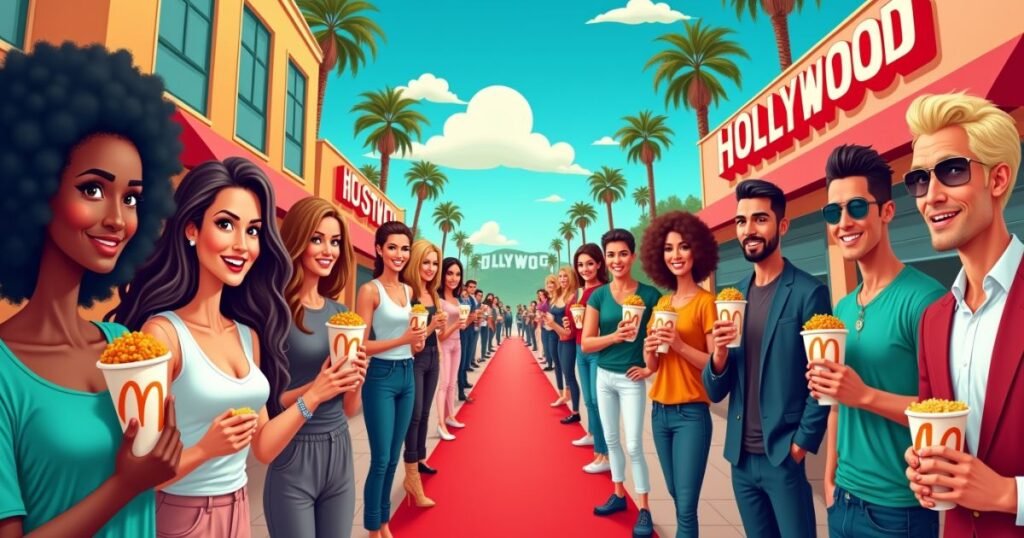
Here’s what nobody tells you about celebrities: they’re tired. Long shoots, early call times, back-to-back appearances. When the workday ends, nobody wants a three-course tasting menu. They want something fast, familiar, and genuinely delicious.
That’s why celebrity hangouts in Los Angeles often aren’t the places you’d expect. It’s Pink’s at midnight. It’s In-N-Out after the Oscars. Post-award show food traditions in Hollywood are almost entirely built around these spots and honestly, that says everything.
“There’s nothing like a Double-Double after a long shoot. It just hits different.” sentiment shared repeatedly across Hollywood circles
Fast Food Appearances in Famous Films
Quentin Tarantino famously shaped Pulp Fiction’s entire aesthetic around California burger culture. The Big Kahuna Burger scenes are practically a love letter to the Hollywood fast food experience.
Several classic LA burger joints have appeared as filming locations, background dressing, or direct references in movies spanning decades. From Dazed and Confused to countless indie films, fast food isn’t backdrop it’s character.
Famous fast food in Hollywood films:
- Pulp Fiction fictional burger culture central to the plot
- Gone in 60 Seconds In-N-Out featured prominently
- Harold & Kumar Go to White Castle proves fast food as cinematic destination
- Dazed and Confused a local burger spot serves as the social hub
The Design and Aesthetic of Hollywood Fast Food
Walk past any of these spots at night. Really look at them. The retro neon signs, the angular rooflines, the stark lighting this is mid-century architecture doing exactly what it was meant to do: shout “stop here” to a passing car at 40 mph.
This isn’t accidental design. It’s vintage restaurant design that became cultural shorthand for America itself. Neon-lit burger joints gave photographers, filmmakers, and Instagram users a ready-made aesthetic that never goes out of style.
| Design Element | Purpose |
|---|---|
| Neon signage | Visibility + atmosphere |
| Open kitchens | Trust + theater |
| Simple menus | Speed + clarity |
| Walk-up windows | Accessibility |
Late-Night Food Culture in Hollywood
After midnight in Hollywood, something shifts. The tourist traffic thins. The industry crowd emerges. And the late-night fast food spots get very, very busy.
Late-night burgers in Hollywood aren’t just sustenance they’re social rituals. Crew members, actors, musicians, club-goers. Everyone ends up at the same counters. It’s the great equalizer. A grip and an A-list actor ordering the same chili burger at 2 AM that’s authentic Hollywood dining tradition you won’t find in any guidebook.
The Role of Tourists in Hollywood Fast Food Fame
Hollywood food tourism is a genuine industry now. Visitors fly into LAX with a list: the Walk of Fame, Grauman’s Chinese Theatre, and yes Pink’s Hot Dogs.
Must-visit food spots in LA aren’t always the newest or trendiest. Often they’re the oldest. Tourists instinctively understand that eating at a 75-year-old hot dog stand connects them to something real. Something that existed before Instagram, before food critics, before the algorithm decided what mattered.
Top tourist fast food stops near Hollywood Blvd:
- Pink’s Hot Dogs (Melrose Ave)
- In-N-Out Burger (multiple locations)
- Fatburger (Hollywood location)
- Tommy’s (Rampart Boulevard original)
Social Media and the New Era of Hollywood Fast Food
TikTok food trends in LA have introduced In-N-Out’s secret menu to an entirely new generation. Instagram food locations in Hollywood get tagged thousands of times daily. YouTube food channels have dedicated entire series to ranking LA’s best burgers.
Social media didn’t change these places. It amplified them. The viral food spots in Los Angeles that rack up millions of views are almost always the ones with decades of history behind them. Authenticity travels. That neon sign at Pink’s? It photographs beautifully because it was designed beautifully just 80 years ago.
The Timeless Appeal of Simple Food
Strip everything back. No truffle oil. No deconstructed anything. Just a good hamburger, fresh beef, ripe tomatoes, and a bun that holds together.
That simplicity is harder to achieve than it looks and these legendary Hollywood eateries have been nailing it for generations. Comfort food culture isn’t nostalgia for nostalgia’s sake. It’s recognition that some things are just done right, and there’s no reason to mess with them.
Preserving Hollywood’s Fast Food Heritage
Cultural food landmarks don’t preserve themselves. Several iconic LA spots have faced demolition threats, rent hikes, and the relentless pressure of development. The fact that Tommy’s original stand still stands on Rampart Boulevard unchanged, undecorated, unstoppable feels almost defiant.
Organizations and local preservationists have fought to keep these LA food landmarks intact. Because they understand something important: Los Angeles food tourism isn’t just about beaches and movie studios. It’s about the authentic LA food culture that grew alongside Hollywood itself.
A Living Piece of Hollywood History
Here’s the thing about iconic Hollywood fast food: it never stopped being relevant. It didn’t need a rebrand. It didn’t need a celebrity chef to reinvent it. The classic American fast food meals served at these spots today are essentially identical to what was served 50, 60, 70 years ago.
That consistency is its own kind of excellence. In a city that reinvents itself constantly, these spots are the anchor. They remind everyone tourist, local, A-lister, crew member that sometimes the best things in life really are simple, affordable, and wrapped in paper.
Next time you’re in Los Angeles? Skip the reservation. Find the neon. Join the line. You’re not just grabbing a bite you’re eating a living piece of Hollywood history.
FAQ’s
What is the Hollywood themed restaurant chain?
Planet Hollywood is the most famous Hollywood-themed restaurant chain, founded in 1991. It features movie memorabilia, film props, and celebrity connections throughout its locations. However, for authentic Hollywood fast food culture, locals point to spots like Pink’s Hot Dogs, In-N-Out Burger, and Fatburger as the real icons.
What’s the number one unhealthiest fast food?
Studies consistently rank Five Guys and certain Dairy Queen items among the highest-calorie fast food options. A Five Guys large burger meal can exceed 2,000 calories. However, “unhealthy” is relative a well-made chili burger from Tommy’s, eaten occasionally, is a very different thing from daily processed fast food consumption.
What fast food uses horse meat?
In 2013, a major European food scandal revealed that several fast food chains primarily in the UK and Ireland had unknowingly used horse meat in beef products. Burger King and Taco Bell were among those affected. American fast food chains like In-N-Out, Fatburger, and Tommy’s source domestically and were not implicated in this scandal.
What burger place was in Dazed and Confused?
The 1993 Richard Linklater film Dazed and Confused featured a local Austin, Texas burger stand as a central hangout not a Hollywood-based location. However, the film’s spirit perfectly captures the same roadside food culture and late-night comfort food traditions that define iconic Hollywood fast food on the West Coast.
From the Great Depression pushcart to the TikTok feed, Hollywood’s fast food scene has always been more than just food. It’s the story of Los Angeles itself scrappy, resilient, and absolutely delicious.

Admin of LCF Magazine, a general online magazine covering technology, business, finance, and lifestyle topics. Passionate about sharing informative, easy-to-read content for modern readers.Focused on delivering helpful insights, trends, and practical knowledge online.