
Every heartbeat tells a story. Every breath you take, every wave that crashes on the shore, every note a musician plays they all share one invisible thread. That thread is pulsamento.
It’s not just a word. It’s a force. A living rhythm concept that pulses through biology, art, technology, and the very fabric of human experience. Understanding pulsamento means understanding life itself its rises, its falls, its beautiful, relentless motion.
The Meaning and Essence of Pulsamento
At its core, pulsamento meaning traces back to the Latin root pulsare to beat, to push, to throb. Think of it as the universal pulse beneath all systems, visible and invisible alike.
Pulsamento isn’t just rhythm. It’s rhythmic energy flow the dynamic interplay between movement and stillness, tension and release. It’s what separates something alive from something static.
“Rhythm is the soul of life. The whole universe revolves in rhythm. Everything and every human action revolves in rhythm.” — Babatunde Olatunji
This concept sits at the intersection of neuroscience, cognitive science, and ancient wisdom. Whether you’re a runner, a musician, a meditating monk, or a software engineer pulsamento shapes your reality every single day.
Pulsamento in Music and Sound
Music is where most people feel pulsamento first. The musical rhythm structure of a song its beat, tempo, and dynamic energy creates an invisible contract between performer and listener.
Consider these musical elements governed by pulsamento:
- Beat synchronization your foot taps involuntarily because your brain locks onto the pulse
- Harmonic rhythm how chords change over time, creating emotional momentum
- Sound vibration patterns the physical waves that move air, ears, and ultimately, emotions
- Dynamic sound energy the swells and softness that give music its emotional topography
Ever notice how a slow, sparse piano melody feels completely different from a driving percussion section? That’s tempo and emotional flow at work. The internal timing in music bypasses rational thought entirely. It goes straight to the gut.
Research from the Stanford Center for Computer Research in Music and Acoustics confirms that musical pulse activates motor regions of the brain even when listeners sit perfectly still. Pulsamento literally moves us physically and emotionally.
Pulsamento in the Human Body
Here’s something humbling: you didn’t choose your heartbeat. It just happens. Around 100,000 times a day, your heart contracts and expands in a perfect example of biological pulsamento.
Your body runs on biological rhythms so complex they’d make any engineer envious:
| Biological Rhythm | Cycle | Function |
|---|---|---|
| Heartbeat pulsation | ~60–100 bpm | Oxygen & nutrient delivery |
| Breathing cycles | ~12–20 per minute | Gas exchange, nervous system regulation |
| Circadian rhythm patterns | ~24 hours | Sleep, metabolism, hormones |
| Neural oscillations | Milliseconds to seconds | Thought, memory, perception |
| Sleep cycles | ~90-minute loops | Memory consolidation, repair |
Blood circulation, oxygen delivery, neural activity every life-sustaining process operates through rhythmic cycles. Disrupt the internal body clock and everything cascades: mood destabilizes, immunity weakens, focus evaporates.
The takeaway? Your body is pulsamento. It doesn’t just experience rhythm it is rhythm.
Explore More: Stay Updated with Newsletter Shopnaclo
Emotional Pulsamento and Human Experience
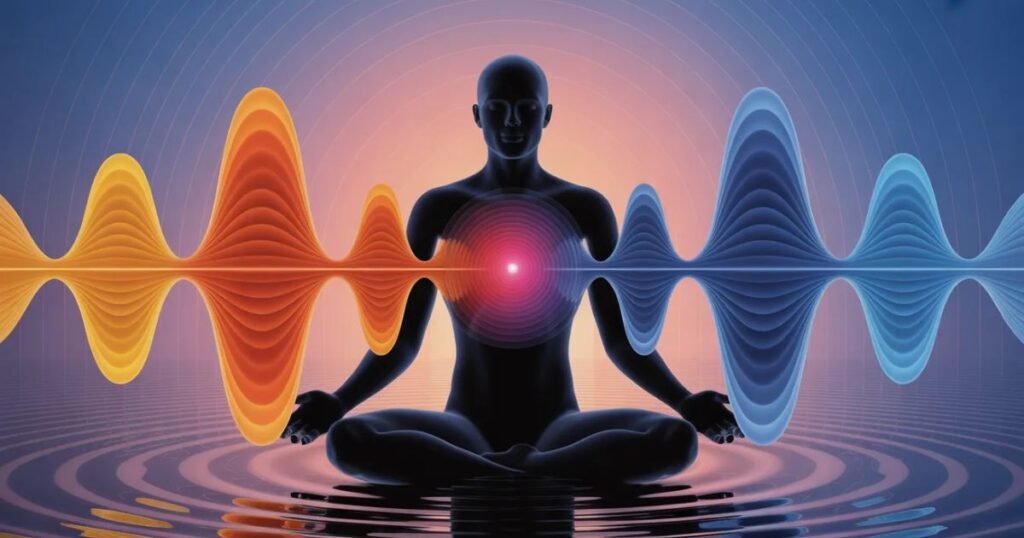
Emotions don’t arrive flat. They surge. They recede. Joy spikes sharply. Calmness settles in slow, gentle waves. Anxiety creates jagged, rapid oscillations that keep you stuck.
This is emotional rhythm cycles the rise and fall of emotional intensity that mirrors the physical pulse.
Psychological flow states depend on emotional pulsamento. According to psychologist Mihaly Csikszentmihalyi’s research on flow, peak performance and deep satisfaction emerge when internal rhythm aligns with external challenge. Too fast, and you feel stress. Too slow, and boredom creeps in.
Mood and rhythm connection isn’t metaphor it’s measurable:
- Faster breathing rhythms correlate with heightened anticipation or fear
- Slower, deeper breathing shifts the nervous system toward calmness
- Brain synchronization between individuals actually occurs during meaningful conversation a shared emotional pulsamento
Understanding your emotional intensity waves gives you real power. Notice when your rhythm is off. Then adjust.
Pulsamento in Nature
Step outside. What do you hear?
Ocean tide patterns governed by the moon’s gravitational pull surge and retreat in cycles spanning hours. Seasonal energy cycles shift entire ecosystems from dormancy to explosive growth. Even weather rhythm systems follow recognizable pulsating patterns.
Nature doesn’t rush. It pulses.
- 🌊 Tides rise and fall twice daily with extraordinary precision
- 🌱 Plant growth accelerates in spring, slows in winter a growth and dormancy phase as reliable as any clock
- 🌍 Planetary motion cycles govern everything from agriculture to animal migration
- ☁️ Storm systems build and dissipate in rhythmic sequences tied to atmospheric pressure
This environmental pulsation isn’t accidental. It reflects the deep interconnected systems that keep ecosystems in ecological balance cycles. Disrupt one rhythm say, through climate change and ripple effects move through every connected system.
Pulsamento in Creativity and Artistic Expression
Ask any writer, painter, or composer and they’ll describe it the same way: there are days when creative flow state arrives effortlessly. And days when nothing comes.
That’s inspiration cycles the natural creative energy waves that fuel artistic work.
Pulsamento in creativity looks like:
- A burst of ideas followed by a quiet integration period
- High-energy drafting sessions paired with slow, deliberate revision
- Storytelling pacing that accelerates tension then releases it the narrative heartbeat
- Artistic expression patterns that reflect the creator’s internal emotional rhythm
Great art doesn’t hold one note forever. It breathes. A novelist who writes relentlessly without rest produces flat prose. A painter who never steps back loses perspective. Creative productivity rhythm work, rest, reflect, return mirrors the biological rhythms that sustain the body.
Pulsamento in Technology and Digital Systems
Your smartphone pulses, too just in ways you can’t see.
Digital pulse signals carry information across global networks thousands of times per second. Processor clock cycles time every computation your device performs. Data transmission waves move your emails, your music, your video calls all through rhythmic, timed bursts.
Examples of technological pulsamento:
- Processor clock cycles in modern CPUs run at billions of pulses per second
- Network traffic patterns surge during peak hours, ebb at night like digital tides
- Real-time processing cycles power everything from GPS routing to financial markets
- User interface animation flow uses rhythm to guide attention and signal system states
- Notifications interrupt your focus with micro-pulses of information a double-edged technology rhythm
Engineers who understand system synchronization build more reliable, intuitive products. Designers who apply interactive design rhythm create experiences that feel natural because they align with human cognitive rhythm patterns.
Cultural Interpretations of Pulsamento
African drumming traditions understand pulsamento at a cellular level. In many West African cultures, the drum isn’t an instrument it’s a language, a heartbeat, a community’s nervous system. Polyrhythmic patterns layer multiple pulses simultaneously, creating a texture of sound that shifts your entire state.
Latin musical styles like salsa, cumbia, and samba encode pulsamento in their DNA. The clave rhythm in Cuban music a five-beat pattern that anchors everything else is pure pulsamento made audible.
Classical traditions, from Indian classical ragas to European Baroque, use rhythmic cycles called tala or tactus to organize time into breathable, human-sized units.
Cultural rhythm traditions remind us: every human society, in every era, built its rituals and arts around rhythm. That’s not coincidence. That’s cultural expression through rhythm a universal human instinct.
The Psychological Power of Pulsamento
Rhythmic intelligence the ability to recognize, adapt to, and leverage rhythmic patterns is a genuine cognitive skill. And it’s trainable.
Studies in cognitive science show that brain synchronization between people increases during shared rhythmic activities. Teams who move in sync literally think better together. Choral singers show elevated oxytocin levels the bonding hormone compared to solo singers.
Mental synchronization through pulsamento:
- Improves focus and attention rhythms during demanding tasks
- Reduces stress and relaxation cycles by giving the nervous system a predictable anchor
- Enhances perception and situational awareness
- Accelerates learning through temporal patterns that prime memory encoding
The psychology is clear: align with the right rhythm and your mind performs at a different level entirely.
Pulsamento and Mindfulness
Mindfulness teachers have known this for millennia. Mindful breathing rhythm is the oldest biohack in existence.
When you deliberately slow and deepen your breath creating intentional breathing cycles you shift from sympathetic (fight-or-flight) to parasympathetic (rest-and-digest) nervous system dominance. Meditation cycles exploit this directly.
Simple pulsamento mindfulness practices:
- Box breathing: Inhale 4 counts, hold 4, exhale 4, hold 4 repeat
- Rhythmic body scan: Move attention through your body in slow, pulsing sweeps
- Conscious breathing practices: Simply observe your natural breath rhythm without changing it
Rhythmic awareness is the foundation of stress reduction, emotional regulation, and mental clarity through rhythm. You don’t need an app. You just need to notice the pulse already inside you.
Pulsamento in Movement and Physical Performance
Elite athletes obsess over rhythm even when they don’t call it that.
A marathon runner’s endurance pacing is pure pulsamento: find the right cadence, settle in, and the miles flow. Break that rhythm surge too early, panic mid-race and the body rebels.
Athletic timing coordination shapes performance across every sport:
| Sport | Pulsamento Element |
|---|---|
| Running | Stride cadence (~180 steps/min optimal) |
| Swimming | Stroke and breathing synchronization |
| Martial arts | Attack-defense timing cycles |
| Team sports | Movement coordination between players |
| Dance | Full body alignment with musical pulse |
Motor coordination cycles improve with deliberate practice. Athletes who train rhythmic awareness through dance rhythm patterns, music-synchronized drills, or simply counting develop sharper movement efficiency and faster reaction times.
The Hidden Pulsamento of Daily Life
Your day already has a rhythm. You just might not be paying attention to it.
Morning wakefulness brings a natural cortisol spike energy for action. Afternoon productivity peaks around 2–4 PM for most people, then dips. Evening relaxation signals melatonin release. Nighttime recovery does the deep work of cellular repair.
Your hidden daily pulsamento:
- Work cycles averaging 90-minute deep focus periods (matching ultradian rhythms)
- Break cycles that restore cognitive resources non-negotiable, not optional
- Creative bursts that cluster around specific times based on your chronotype
- Energy management patterns that shift with nutrition, sleep, and stress
Productivity rhythm isn’t about working harder. It’s about working in sync with your biology. Ignore these cycles and you grind against your own nature. Honor them and you operate at a fraction of the effort for double the output.
Why Pulsamento Matters
Here’s the bottom line: everything alive pulses.
From the heartbeat of a newborn to the orbital mechanics of distant planets, from the creative flow of a novelist to the clock cycles of a quantum computer pulsamento is the organizing principle beneath all motion and all meaning.
Why it matters for you:
- It explains why some days feel effortless and others feel impossible you’re either in rhythm or fighting it
- It reveals why music affects human emotions so powerfully shared vibration is shared experience
- It shows why biological rhythms in health matter more than any single supplement or intervention
- It illuminates why natural cycles and human behavior align more than modern life typically allows
Pulsamento isn’t abstract philosophy. It’s practical intelligence about how reality actually works.
Embracing Pulsamento in Modern Life
Modern life often works against natural rhythm. Constant notifications. Artificial lighting that disrupts circadian rhythm patterns. Work cultures that reward relentless output over sustainable work and rest balance.
Reclaiming your pulsamento:
- Sleep consistently protect your circadian anchor
- Move rhythmically walking, running, dancing all restore internal coherence
- Create intentionally honor your creative energy waves; don’t force production
- Breathe deliberately use mindful breathing techniques as a daily reset
- Limit digital interruption reclaim your focus and break cycles from algorithmic disruption
- Spend time in nature natural rhythms recalibrate your own
Lifestyle rhythm balance isn’t luxury self-care. It’s baseline sanity in an overstimulated world.
The Future of Pulsamento
Technology is beginning to catch up with ancient wisdom here.
Wearable devices now track heartbeat pulsation, sleep architecture, and body energy flow in real time. AI systems are learning to adapt their outputs to user energy patterns imagine software that slows down when your focus wanes and accelerates when you’re sharp.
Adaptive rhythmic systems in architecture, urban design, and education will increasingly align built environments with human biological rhythms. Research in neuroscience is mapping how neural oscillations underpin consciousness itself a direct window into the brain’s pulsamento.
The future isn’t faster. The future is better timed.
Final Reflection
Pulsamento is already everywhere you look in the rhythm of your breath, the beat of your favorite song, the surge of a creative idea, the tide retreating from a shoreline at dawn.
The question isn’t whether pulsamento exists in your life. It’s whether you’re listening to it.
When you align with your natural rhythms biological, emotional, creative, social something shifts. Life stops feeling like friction. It starts feeling like flow. And that flow, that living rhythm concept running through every moment of your existence, is pulsamento.
Honor the pulse. It’s the most honest thing about you.

Admin of LCF Magazine, a general online magazine covering technology, business, finance, and lifestyle topics. Passionate about sharing informative, easy-to-read content for modern readers.Focused on delivering helpful insights, trends, and practical knowledge online.