

Finding the perfect gaming PC feels overwhelming. Hundreds of options exist. Prices range wildly from budget to premium. You’re not alone in this confusion.
This comprehensive gaming PC buying guide 2026 cuts through the noise. We’ll explore everything from processors to prebuilt systems. By the end, you’ll know exactly which PC to buy for gaming based on your needs and budget.
Understanding Your Gaming Needs
Before spending a single dollar, identify your requirements. Are you chasing competitive esports titles or immersing yourself in open-world games? Different gaming styles demand different hardware configurations.
Casual gamers playing indie titles need far less power than someone running AAA games at 4K resolution. Streaming gameplay adds another layer of complexity. Your monitor’s resolution matters tremendously 1080p, 1440p, and 4K each require distinct GPU capabilities.
Think about longevity too. A future-proof gaming PC costs more upfront but saves money long-term. Consider what games you’ll play three years from now.
Processor (CPU): The Brain of Your Gaming PC
Your gaming CPU requirements center on core count and clock speeds. Modern titles utilize 6-8 cores efficiently. More cores help with multitasking and streaming.
Single-core vs multi-core CPU gaming remains debated. However, games increasingly leverage multiple threads. A multi-core gaming processor ensures smooth performance across all scenarios.
The best CPU for gaming 2026 balances speed with efficiency. Intel’s latest offerings compete fiercely with AMD’s Ryzen lineup. For streaming and gaming simultaneously, prioritize higher core counts 8 cores minimum.
Don’t bottleneck your system. Match your CPU with your graphics card appropriately. An entry-level GPU paired with a high-end processor wastes money.
Graphics Card (GPU): The Most Important Component
Nothing impacts gaming performance more than your GPU. This single component determines your frame rates and visual fidelity.
Best GPU for gaming varies by resolution:
- Entry-level GPU 1080p: Handles esports and older AAA titles smoothly
- Mid-range GPU: Powers 1440p gaming with high settings
- High-end gaming GPU: Crushes 4K and enables ray tracing
Graphics card recommendations 2026 emphasize efficiency. Newer architectures deliver better performance per watt. Ray tracing GPU for gaming adds cinematic lighting but demands serious horsepower.
GPU hardware encoding support matters for streamers. Modern cards handle encoding without tanking frame rates. Allocate 40-50% of your total budget here it’s that critical.
RAM: How Much Do You Really Need?

Gaming PC RAM requirements have stabilized recently. 16GB RAM serves most gamers perfectly. However, 32GB RAM future-proofs your system and supports heavy multitasking.
RAM speed and gaming performance show minimal differences beyond DDR4-3200. Don’t overspend chasing marginal gains. Focus on capacity first, speed second.
Upgradeable RAM gaming PC setups need available slots. Ensure your motherboard supports expansion. Dual-channel configuration doubles bandwidth always use matched pairs.
Content creators benefit from 32GB minimum. Gaming alone? 16GB vs 32GB RAM for gaming favors 16GB for budget builds, 32GB for premium setups.
Storage: SSD vs HDD
The SSD vs HDD for gaming debate ended. SSDs won decisively. Load times shrink from minutes to seconds.
NVMe SSD for fast load times revolutionizes gameplay. A 1TB NVMe SSD costs less than $70 now. Open-world games load entire cities instantly.
Storage requirements for AAA games balloon yearly. Modern titles consume 100-200GB each. Start with 1TB minimum. Expandable storage gaming PC designs let you add drives later.
Keep your OS and favorite games on the SSD. Archive older titles on cheaper HDDs if needed. But honestly? Skip HDDs entirely in 2026.
Explore More: apps and software aliensync
Motherboard and Upgrade Potential
Your best motherboard for gaming PC determines upgrade paths. Cheap boards limit future improvements. Quality motherboards last through multiple GPU generations.
PCIe slots and VRM cooling separate good from great. Strong VRMs handle overclocking without throttling. Extra PCIe slots accommodate capture cards or WiFi adapters.
Motherboard upgrade options include more RAM slots and M.2 connections. Future-proof gaming PC motherboard choices support the latest standards. DDR5, PCIe 5.0, and USB 4.0 matter for longevity.
Don’t cheap out here. Spending $150-250 ensures flexibility. Your motherboard outlives most other components.
Power Supply Unit (PSU): Do Not Ignore It
Gaming PC PSU guide teaches one rule: never skimp. Cheap PSUs destroy entire systems. One voltage spike kills everything.
Recommended wattage for GPU upgrades requires headroom. Calculate total system power, then add 30%. High-end builds need 750-850 watts minimum.
80+ certified PSU for gaming ensures efficiency:
- 80+ Bronze PSU: Budget-friendly, decent efficiency
- 80+ Gold: Sweet spot for most builds
- 80+ Platinum: Premium efficiency, quieter operation
PSU brand reliability for PC centers on Corsair, EVGA, Seasonic. Their warranties span 7-10 years. Your PSU should outlast everything else.
Cooling System: Air vs Liquid
Air vs liquid cooling gaming PC both work excellently now. Air cooling costs less and requires zero maintenance. Liquid cooling looks premium and handles overclocking better.
CPU cooling for overclocking demands robust solutions. A quality tower cooler matches entry-level liquid systems. GPU cooling solutions matter too aftermarket cards vastly outperform reference designs.
Optimal airflow for gaming case involves intake and exhaust balance. Positive pressure reduces dust buildup. Thermal paste maintenance every 2-3 years keeps temperatures optimal.
Prebuilt vs Custom Gaming PC
Prebuilt gaming PC advantages include warranties and zero assembly hassle. Custom gaming PC benefits center on component selection and upgrade flexibility.
Budget vs performance gaming PCs favor prebuilts during GPU shortages. Otherwise, assembling your own gaming PC saves 10-15% typically. You control every component choice completely.
Prebuilt systems sometimes use proprietary parts. This limits future upgrades significantly. Always verify component compatibility before purchasing.
Budget Categories Explained
Understanding tiers helps tremendously. Each category targets specific performance levels and resolutions.
Budget Gaming PCs
Budget gaming PCs 1080p start around $600-800. These systems handle esports titles at high FPS easily. AAA games run on medium-high settings smoothly.
Expect entry-level GPUs paired with capable processors. 16GB RAM standard. 500GB-1TB SSD typical. Perfect for competitive gaming and mainstream titles.
Mid-Range Gaming PCs
Mid-range 1440p gaming PC setups ($1000-1500) deliver fantastic value. They crush 1440p gaming while maintaining 100+ FPS in most titles.
These builds include better GPUs and processors. Improved cooling systems. More storage. Enhanced upgrade potential through quality motherboards.
High-End Gaming PCs
High-end 4K gaming system configurations ($2000+) provide no-compromise performance. Ray tracing enabled. Maximum settings on everything. Future-proof for years.
Premium components throughout. Exceptional cooling solutions. RGB lighting and tempered glass panels. These gaming PC performance optimization machines handle anything thrown at them.
Best gaming PC under $1000
The sweet spot for most gamers. Best budget gaming PC 2026 combines smart component choices with balanced configurations.
Prioritize GPU spending here. Pair a mid-tier graphics card with a solid 6-core processor. Include 16GB RAM and 1TB NVMe SSD. You’ll achieve excellent 1080p performance and decent 1440p results.
Best Prebuilt Gaming PCs 2026
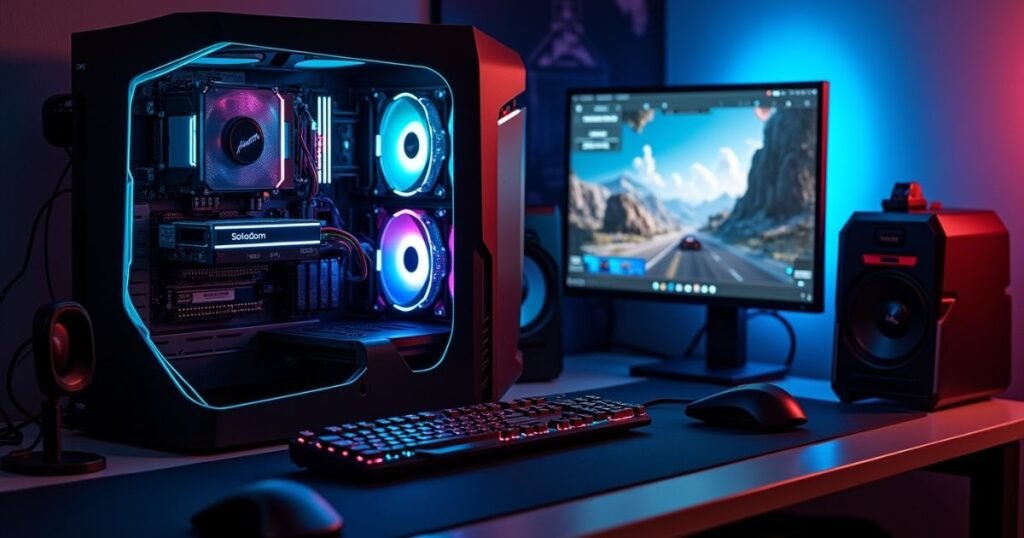
Major manufacturers improved significantly. Best prebuilt gaming pc 2026 reddit communities recommend NZXT, Maingear, and CyberPowerPC consistently.
These companies use standard components now. Upgrades remain possible. Warranties cover everything. Pricing became competitive with DIY builds recently.
Best prebuilt gaming pc 2026 reddit
Reddit communities thoroughly vet prebuilt systems. They catch proprietary motherboards and weak PSUs. Follow their recommendations you’ll avoid costly mistakes completely.
Gaming PC that can run any game
Desktop gaming PC configurations need balanced specs. No single component should bottleneck others. A gaming computer guide emphasizes harmony over individual part supremacy.
Target 8-core CPUs minimum. Mid-to-high range GPUs. 32GB RAM for headroom. Quality PSU with overhead. This gaming system buying guide formula handles everything released.
Upgradable gaming PC
Upgrade-friendly gaming case designs feature tool-less panels and spacious interiors. Cable management tips improve both aesthetics and airflow simultaneously.
Select motherboards with extra RAM slots and multiple M.2 connections. Ensure your PSU provides sufficient wattage for future GPU upgrades. Planning ahead saves complete rebuilds later.
Gaming at Different Resolutions
Your monitor dictates requirements. FPS benchmarks gaming PC performance varies dramatically across resolutions.
1080p gaming PC needs modest hardware. 1440p gaming PC demands significantly more power. 4K gaming PC requires top-tier everything.
Match your system to your display. Gaming at 1080p, 1440p, 4K each offers distinct experiences. Higher resolutions need exponentially more GPU horsepower.
Explore More: Socials and Softwares Aliensync
Future-Proofing Your Gaming PC
Future-proofing means buying slightly above current needs. This gaming setup extends relevance by years.
Choose motherboards supporting next-gen standards. Oversize your PSU for headroom. Select cases with excellent airflow and cable management. Quality components last longer inherently.
PC longevity 5–7 years requires smart initial choices. Skimping on motherboards or PSUs shortens lifespan dramatically.
Gaming and Streaming Setup
Gaming and streaming PC setup demands extra CPU cores. 8 cores minimum handles dual workloads smoothly.
CPU and RAM for streaming recommendations include 32GB for comfortable multitasking. GPU hardware encoding support offloads work from your processor entirely.
Streaming gameplay stresses systems uniquely. Multitasking gaming PC configurations need buffer beyond pure gaming requirements.
Aesthetic and Case Design
RGB gaming PC case options explode annually. Tempered glass gaming case designs showcase your components beautifully.
Airflow and cable management remain functional priorities. Pretty builds that overheat serve nobody well. Balance looks with performance always.
Gaming setup aesthetics matter to many enthusiasts. Express yourself while maintaining proper cooling fundamentals.
Common Mistakes to Avoid
Overspending on CPUs while underfunding GPUs. Buying inadequate PSUs. Ignoring airflow. Choosing non-upgradeable proprietary systems.
Selecting gaming PC components requires research and patience. Avoid impulse purchases during hype cycles. Read reviews thoroughly before committing.
Gaming PC vs Gaming Laptop
Desktop gaming vs laptop comparisons favor desktops overwhelmingly. Superior cooling enables better sustained performance. Upgrade flexibility extends lifespan significantly.
Gaming vs laptop performance shows desktops winning at every price point. Laptops sacrifice power for portability necessarily.
Choose laptops only if mobility matters critically. Otherwise, desktop gaming PC setups deliver far more value.
Performance Benchmarks Matter
Benchmarking validates purchase decisions. Never trust marketing alone. Real-world testing reveals truth about hardware capabilities.
Monitor temperatures during gaming sessions. Thermal throttling indicates inadequate cooling solutions. Driver updates for gaming performance boost frames without spending money.
Longevity and Maintenance
Gaming PC maintenance tips include regular dust cleaning and thermal paste replacement. Clean filters monthly. Reapply paste every 2-3 years.
Dust cleaning and thermal paste maintenance prevents overheating and extends component life. This gaming PC lifespan practice costs nothing but saves everything.
FAQ’s
What is the best gaming PC for 2026?
Systems balancing 8-core CPUs, mid-to-high GPUs, 32GB RAM, and 1TB NVMe SSDs. Budget determines exact components, but balanced configurations always win.
What’s the best gaming PC to buy right now?
Mid-range 1440p builds ($1200-1500) offer exceptional value. They handle current titles excellently while providing upgrade headroom.
What to avoid when buying a gaming PC?
Proprietary components, inadequate PSUs, poor airflow cases, and bottlenecked configurations where one component drastically underperforms others.
How to figure out what gaming PC to buy?
Identify your resolution target, game preferences, and budget. Match components to those requirements. Research benchmarks validating your choices.
Final Thoughts
Which gaming PC to buy ScookieGeek depends entirely on your unique situation. Budget constraints, performance expectations, and upgrade intentions all factor in.
This gaming PC buying guide 2026 armed you with essential knowledge. You understand component roles and their importance. You recognize budget tiers and their capabilities.
Start with your budget and resolution target. Build around a strong GPU. Balance remaining components appropriately. Avoid common pitfalls through research and patience.
The best gaming PC for gamers isn’t the most expensive it’s the one matching your specific needs perfectly. Make informed decisions. Happy gaming awaits!

Admin of LCF Magazine, a general online magazine covering technology, business, finance, and lifestyle topics. Passionate about sharing informative, easy-to-read content for modern readers.Focused on delivering helpful insights, trends, and practical knowledge online.